PIANO
The soundboard is crucial
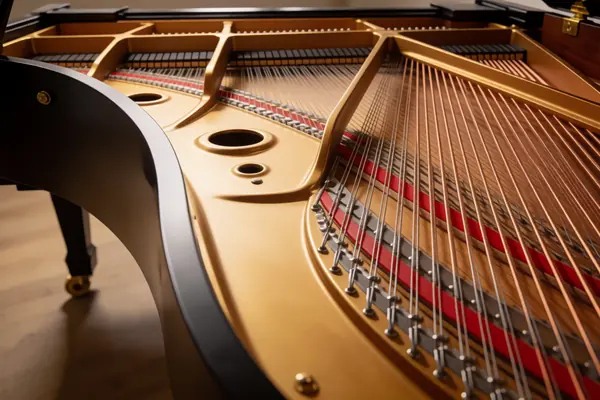
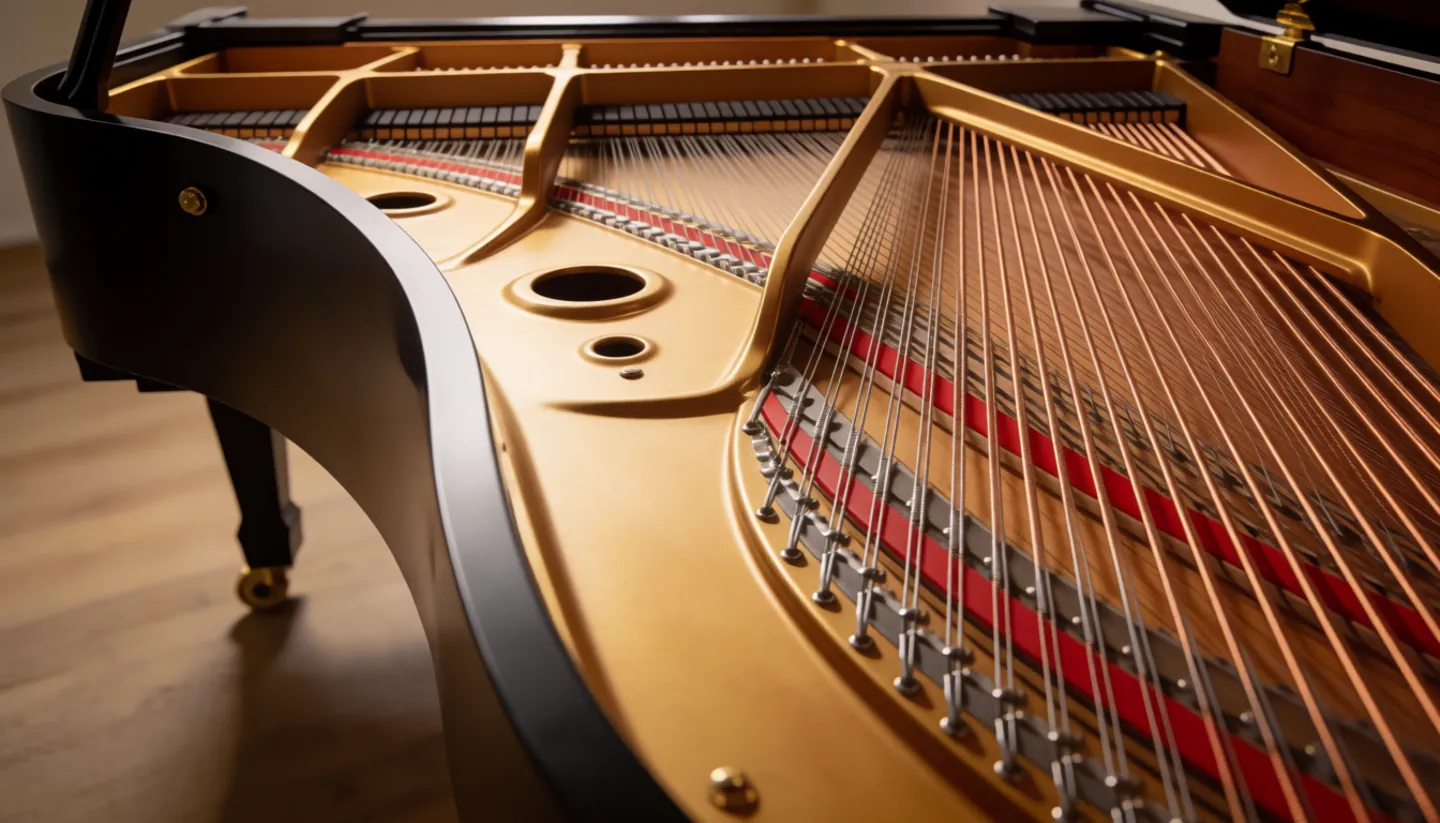
Piano strings pass over a bridge, and energy is coupled from the strings into the soundboard, a crucial element in the piano's sound.
Follow the vibration soundboardgame
THE PHYSICS OF SOUND
A string on its own hardly makes a sound.
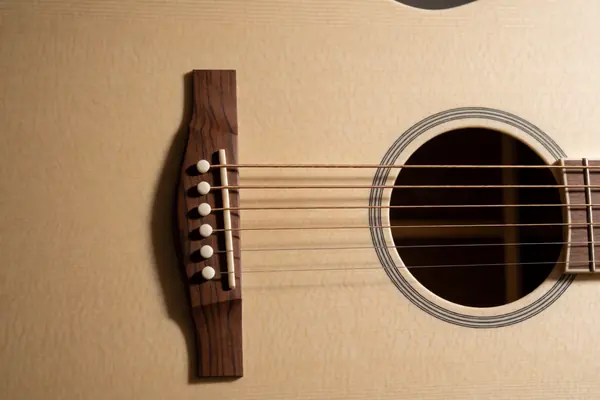
It's thin and slips through the air without disturbing much of it. In a piano or an acoustic guitar, the vibration passes through a bridge into a large, light wooden board, and that board moves enough air for us to hear.
2.5 mm of spruce does the talking
Follow the vibrationTHE SHORT ANSWER
A sound wave is a disturbance of the air.
The soundboard gives the string's energy a big surface to push with.
PIANO
Piano strings pass over a bridge, and energy is coupled from the strings into the soundboard, a crucial element in the piano's sound.
Follow the vibrationGUITAR
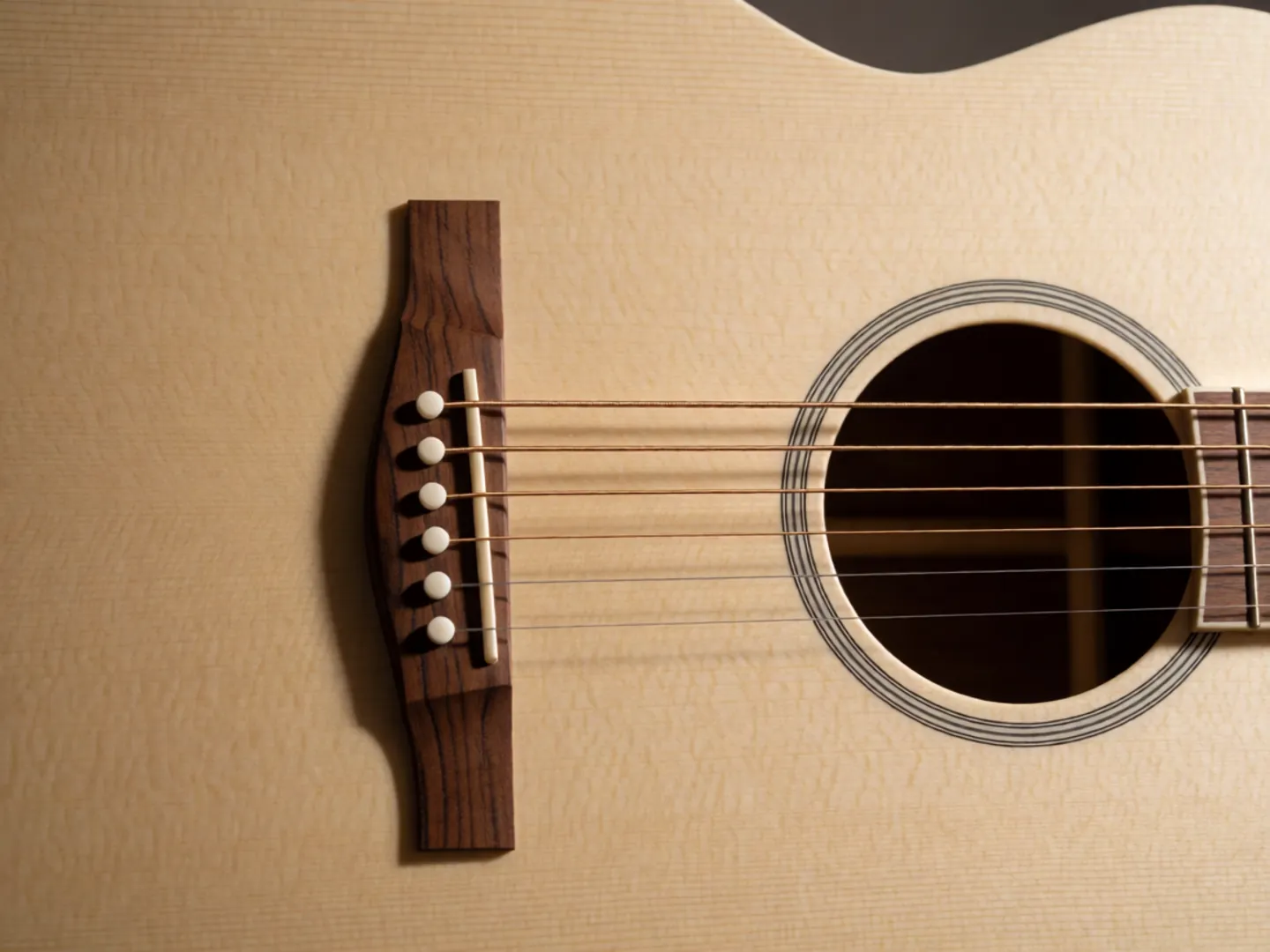
A guitar's top plate is usually spruce or another light, springy wood about 2.5 mm thick, braced inside to keep it flat.
See the numbersPATTERNS
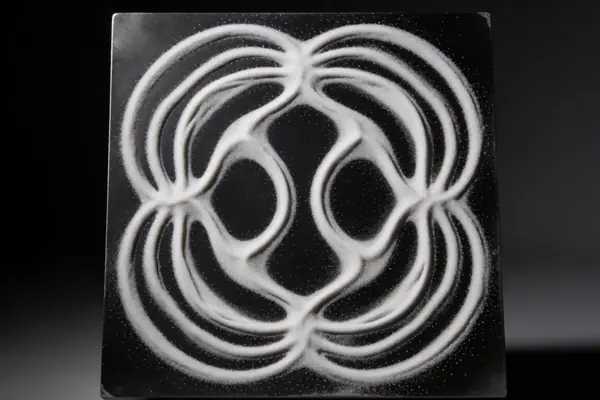
Sprinkle sand on a vibrating plate and it gathers at the nodes, the lines that stay still, drawing a Chladni pattern.
Read the patterns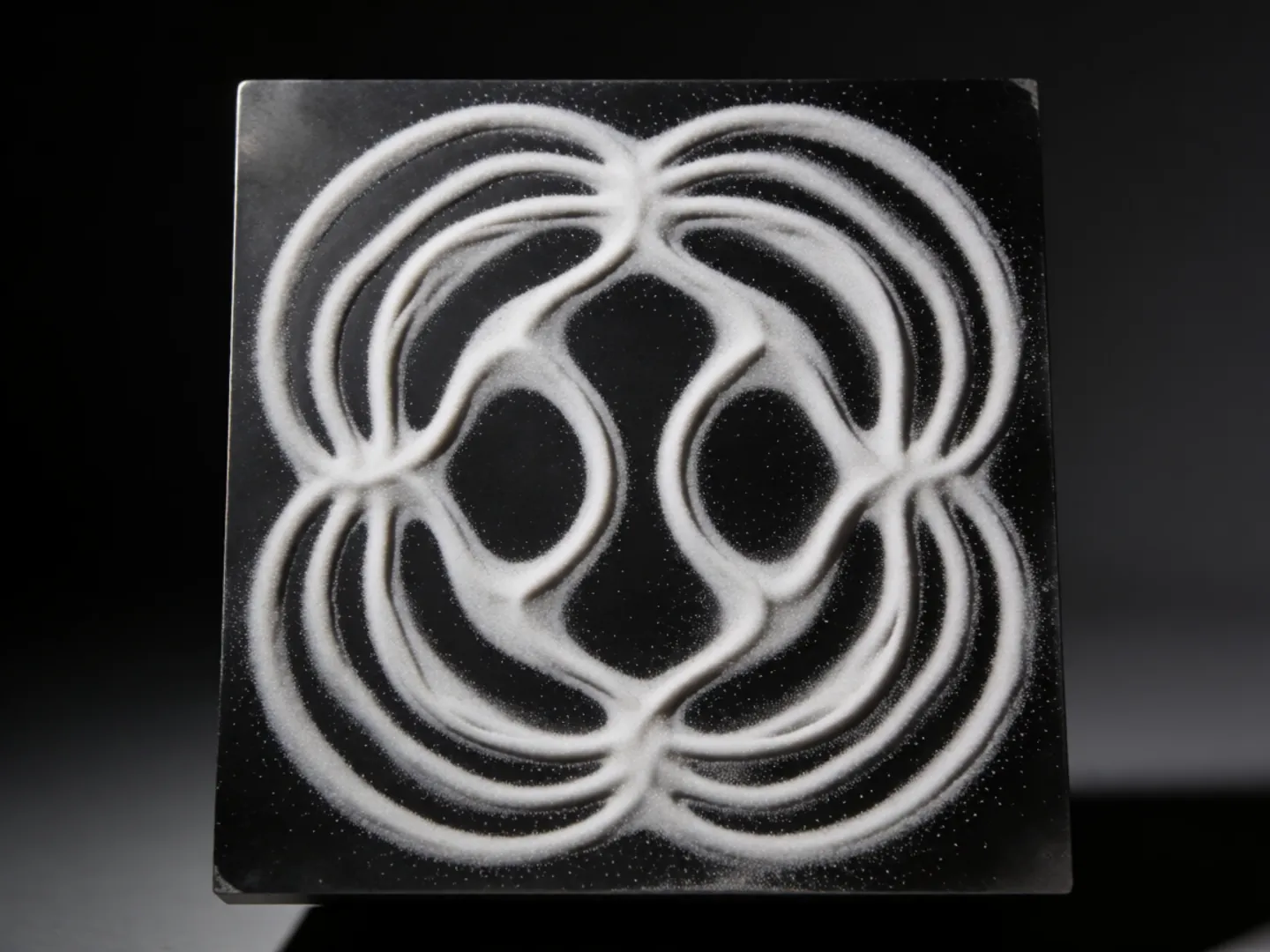
FOUR THINGS TO TRY
A few simple experiments from the acoustics pages show how much the body and the air inside it matter.
Rest a fingertip lightly on a guitar's top while you play a low note and feel it vibrate.
Sing a low note near the sound hole: at one pitch the air inside resonates and you'll hear it bloom.
Strum an electric guitar with no amplifier and notice how little sound a body that barely moves makes.
On a piano, the left pedal shifts the keyboard so the hammers strike fewer strings, giving a softer sound.
TWO NUMBERS WORTH KNOWING
The pull of all the strings in a grand piano,
and the thickness of a typical guitar top.
≈ 30 tons
Total string tension in a grand piano
A grand piano has about 230 strings for its 88 keys, held in a cast iron frame strong enough to take the tension. Iron frames arrived in 1820.
PIANO · HYPERPHYSICS
≈ 2.5 mm
Typical thickness of a guitar top plate
Usually spruce or another light, springy wood, braced underneath so it stays flat while still free to vibrate up and down.
GUITAR · UNSW
The piano's 88 keys span 27.5 Hz to 4186 Hz. Hammers strike about a seventh of the way along the string, to discriminate against an out-of-tune 7th harmonic.
FOLLOW THE VIBRATION
Pick a part of a stringed instrument to see what it does. The bar shows how much of the sound it radiates into the air.
Based on the University of New South Wales music acoustics pages and HyperPhysics (Georgia State University).
CHLADNI PATTERNS
When a plate vibrates at a resonance, parts move up while others move down. The dividing lines, called nodes, stay still, so sand shaken off the moving regions collects there.
A guitar top's patterns are more complicated than a simple rectangle's because of the sound hole and the bracing. The patterns show the geometry of the different ways a top plate vibrates.
Questions
Piano strings pass over a bridge, and energy is coupled from the strings into the soundboard, which HyperPhysics calls a crucial element in the piano's sound.
Not in the technical sense. All the sound energy comes from the player's finger; the body makes the conversion of string vibration into sound more efficient.
Its strings make hardly any sound on their own, and very little of their vibration is turned into sound by the body.
Usually spruce or another light, springy wood, about 2.5 mm thick, with braces inside to strengthen it and keep it flat.
The pattern sand makes on a vibrating plate. It collects along the nodes, the lines that stay still, revealing the shape of the vibration.
Updated
ABOUT THIS NAME
soundboardgame.com is part of the DoodleSale portfolio. It isn't in an auction right now, but you can ask about leasing it.